

Right now love is
in the air
on Djursland
From mid-September to early October the red deer are rutting, and the woods and bogs of Djursland fill with the roars of the stags as the dominant harem holders mark their territory and keep their hinds together.
Djursland has one of Denmark's densest populations of red deer. Here is an overview of five good places, along with advice for your trip.
5 great listening spots on Djursland:
For the best experience, take up position from an hour before sunset until nightfall, or in the hours around sunrise.
Fuglsø Mose, Ramten Skov and Stenvad Hede
The experience: This area holds the largest single population on Djursland, with more than 1,500 animals. The open terrain means the stags' roars carry a long way.
Practical: Drive south-east out of Stenvad and follow Stendyssevej. Pull in at suitable spots along Fuglsøvej, Kvasbrovej, Stendyssevej and Dyringvej.
 Scan the QR code
to get directions.
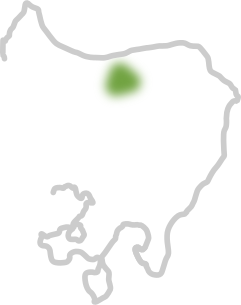 Tap the map for directions
Sostrup Skov and Emmedsbo Plantage
The experience: A large part of northern Djursland's red deer population lives in these connected woodlands. At dusk the deer move towards the open fields and clearings, and the roars can often be heard close to the forest roads.
Practical: Gjerrildbanestien: Turn in along Præstevej. Park, for
example, where the Gjerrildbanestien trail crosses the road, and walk north along the nature
trail.
Emmedsbo Plantage: Drive along Emmedsbovej and let your ears guide you. Stop, for
example, at the car park at Emmedsbo.
 Scan the QR code
to get directions.
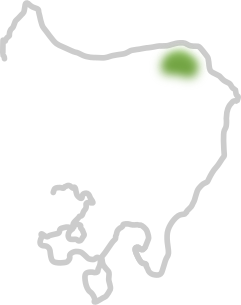 Tap the map for directions
Løvenholm Skov
The experience: Løvenholm Skov is home to one of Denmark's oldest and most original strains of red deer, and at this time of year it sets the stage for fierce rivalry between the stags.
Practical: Park in one of the public lay-bys along main road 16, or pull in along Herredsvej and Løvenholmvej (north of main road 16), where you can hear the roars of the forest.
 Scan the QR code
to get directions.
 Tap the map for directions
Fjeld Skov, Pindstrup and Brunmose
The experience: The area of Fjeld Skov, Pindstrup and Brunmose south-east of Auning is one of the most striking and beautiful woodland areas of central Djursland. Here you can hear the stags' roars roll across the landscape.
Practical: Stop at suitable places along Alvejen, Klemstrupvej, Pindstrupvej and Brunmosevej and let your ears guide you.
 Scan the QR code
to get directions.
 Tap the map for directions
Tirstrup, Skramsø Plantage and Stubbe Sø
The experience: In south-east Djursland the local population has grown markedly in recent years. Here the setting is different: the stags roar at each other from the forest edges across the lakes.
Practical: Try, for example, the car park on Stubbe Søvej at the eastern end
of Stubbe Sø and follow the path to the bird tower. From here you can hear the roars carried
across the lake.
Or drive along Stubbe Søvej, Enhøjvej, Skærsø Skovvej, Ebeltoftvej, Røndevej and Fruerlundvej
and stop where convenient. Let your ears guide you.
 Scan the QR code
to get directions.
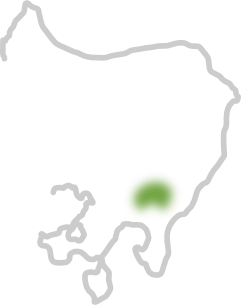 Tap the map for directions
Understanding the stag's different roars
A stag's roar means different things depending on the situation:
The harem holder's territorial roar: Regular, drawn-out sounds with short pauses in between. The harem holder uses it to mark his territory to his surroundings and to keep his hinds together.
The challenge roar: Shorter, aggressive, explosive sounds, heard when two stags take turns answering each other in a vocal duel to size up each other's strength.
Aggression grunts: A rapid series of short, deep sounds in quick succession, uttered when a harem holder breaks into a run to physically chase a rival stag out of the area.
The law and the countryside:
Respect the wildlife and property rights when you are out in the countryside. Pay particular attention to the legislation. Large parts of the woods and bogs on Djursland (for example at Løvenholm and Emmedsbo) are privately owned.
Under the rules on public access to the countryside, there are fixed rules for where and when you may go:
Rules for private woods and nature areas: In private woods you may only travel on foot or by bicycle on established roads and paths. You must not walk out onto the forest floor, into thickets, or onto private heath and bog areas.
Time restriction: Access to private woods is only permitted from 6 a.m. until sunset. As the stags roar most intensely after sunset, in practice this means you may not be in private woods after sunset.
Dogs on a lead: Dogs must be kept on a lead and must not disturb the wildlife. We recommend leaving the dog at home.
Respect the wildlife – show consideration!
The rut is the animals' mating season, and they are stressed and watchful. If you break the rules and go off-road into the thickets, you risk disturbing the rut.
If a harem holder is disturbed by people, he may flee and move his whole herd out of the area, affecting both the nature experience and wildlife management.
Remember, too, that the stags can be aggressive during the rut. Keep a good distance from the animals.
Bring good binoculars and warm clothing. Stay on the public roads, car parks and marked public nature trails. Show consideration for the inhabitants of the forest.
Have a great trip!