
Do‑it‑yourself red deer safari
Djursland is one of the best places in Denmark to experience red deer. With 3,000–4,000 red deer, the area has one of the country's largest populations of free-roaming red deer.
Many people imagine that you have to hike far through forests and heathland to experience the big deer. In reality, the car is often the best way to experience red deer. It allows you to observe the animals from a distance without moving around in the terrain or risking disturbing them unnecessarily. At the same time, you avoid problems with entering private land.
Experience some of Denmark's largest herds of red deer
Red deer live in herds for most of the year. On Djursland you can experience the animals on open fields, meadows and heathland all year round, where they are often easier to spot than in the forests.
On Djursland it is not unusual to encounter herds of over 400 red deer. A nature experience matched by only a very few other places in Denmark.
Here are some of the best spots for a red deer safari on Djursland:
Stenvad Hede
Stenvad Hede is, for many, the natural place to start. The vast open expanses give you a good chance of spotting the animals, and the red deer are often surprisingly easy to see in the open landscape.
The area is particularly attractive in the morning hours and late in the day, but red deer can be seen all year round and at all hours of the day.
 Scan the QR code to get a route from Google Maps on your mobile phone – or open the route directly in Google Maps →
Løvenholm
Løvenholm is one of Djursland's largest continuous forest areas and is home to a substantial population of red deer. Here it is above all the transition between forest and open fields that is of interest. Many of the area's roads offer views of meadows and cultivated land, where the red deer often come out to graze.
On the open land around the forests, you may be lucky enough to see both smaller groups and larger herds all year round.
 Scan the QR code to get a route from Google Maps on your mobile phone – or open the route directly in Google Maps →
The Emmedsbo and Mejlgård area
In the northern part of Djursland there are large continuous natural areas with forests, meadows and fields where the red deer thrive. Here the animals are often seen on open land near the forests, and the area is known for holding many deer.
The many transitions between forest and open country provide good opportunities to experience red deer in their natural surroundings.
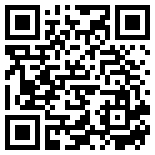 Scan the QR code to get a route from Google Maps on your mobile phone – or open the route directly in Google Maps →
Helgenæs
Helgenæs offers a completely different landscape from northern Djursland. Here the open hills, fields and coastal areas provide long views across the landscape. Red deer are regularly seen on the open land, and the rolling surroundings lend a special atmosphere to the experience.
On clear mornings and calm evenings, you may be lucky enough to watch red deer against the backdrop of some of Djursland's most beautiful scenery.
 Scan the QR code to get a route from Google Maps on your mobile phone – or open the route directly in Google Maps →
Kalø
Kalø and the surrounding forests and fields are also home to red deer. Especially around dawn and dusk, you may be lucky enough to see the animals on the open land near the forests.
The area combines fascinating nature, cultural history and good opportunities for wildlife experiences.
 Scan the QR code to get a route from Google Maps on your mobile phone – or open the route directly in Google Maps →
See our guided tours and book your next nature experience.
When are your chances best?
Red deer can be seen all year round, but your chances are often best:
- Early in the morning around sunrise.
- Late in the afternoon and around sunset.
- On calm and overcast days.
Although red deer are generally most active around dawn and dusk, it is not unusual to see them grazing in the middle of the day.
How to experience the red deer
Red deer are often more tolerant of traffic than of people moving around in the terrain. However, the animals do notice cars that slow down markedly or stop, so observations should be made calmly and discreetly.
If the animals become restless, begin to gather, move away or break into a run, you should drive on and give them peace. Large herds of red deer can react as one, and if many animals flee at once, dangerous situations can arise, especially if they cross a road. The goal is to experience the red deer on their terms – not to influence their behaviour.
Binoculars can be an advantage, but many experiences can also be enjoyed with the naked eye.
Book your next nature experience
A foraging tour on the beach, an adder safari or a bird-watching tour with local ornithologists – find your next experience and sign up today.